
Is a UUID the same as a GUID?
In most practical developer conversations, GUID and UUID refer to the same 128-bit identifier format.
UUIDs are useful when you need identifiers that can be created without asking a central service for the next number. This generator creates UUID v4 values for random identifiers and UUID v7 values when you want time-ordered IDs that sort more naturally by creation time.
Generate one value or a batch, copy everything at once, switch to uppercase, or remove hyphens for systems that store compact UUID strings. The validator accepts hyphenated and compact UUIDs and reports the detected version and RFC 4122 variant.
Loading tool...
UUID v4 values have a very large random space. UUID v7 combines a timestamp with random bits so values can remain globally useful while improving chronological ordering. They are still identifiers, not secrets. Do not use UUIDs as authorization tokens unless the surrounding system treats them as public IDs.
In most practical developer conversations, GUID and UUID refer to the same 128-bit identifier format.
Use UUID v7 when chronological sorting or database locality matters more than the purely random layout of v4.
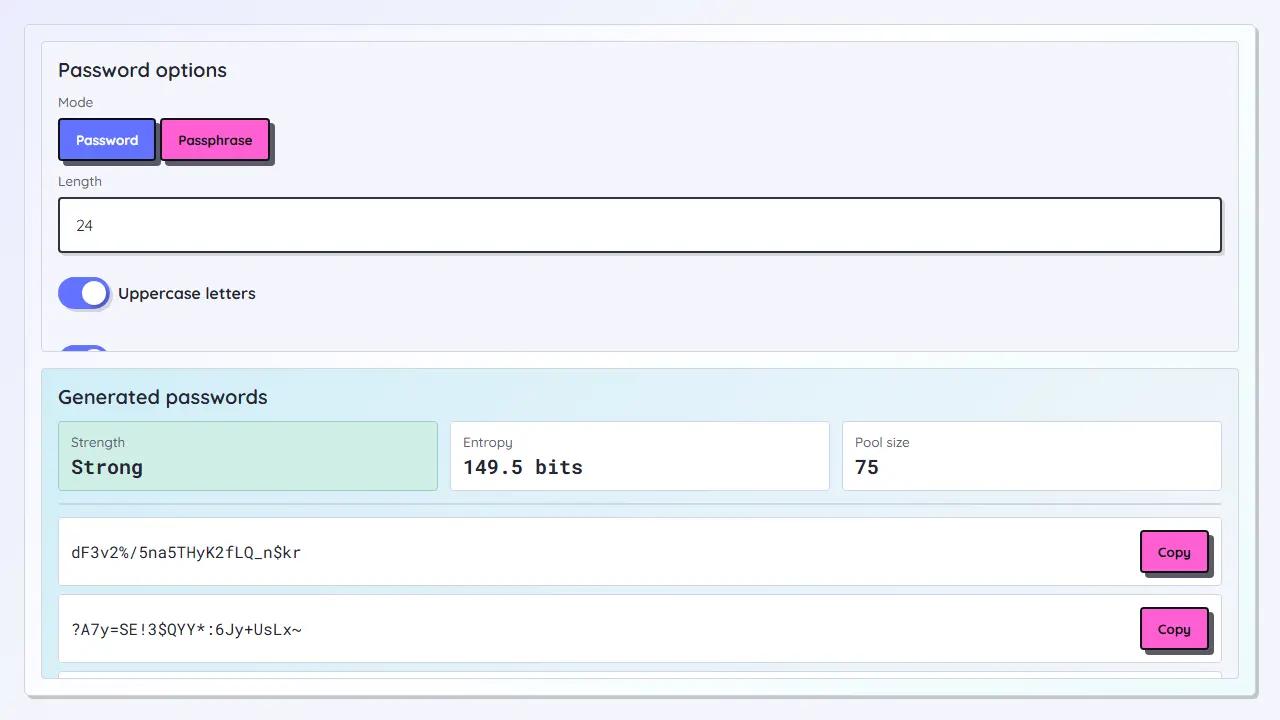
No. Treat UUIDs as identifiers. Use the password generator for credentials or temporary secrets.