

Scrum Tools
Tools for estimation, backlog refinement, sprint planning, and distributed Scrum ceremonies.
Scrum support without heavyweight process
Scrum ceremonies work best when the tool speeds up alignment instead of becoming the meeting. This collection brings together lightweight helpers for estimation, refinement, and planning so teams can reach a shared view faster.
Use these tools to make uncertainty visible, guide the conversation, and keep decisions clear before they move into the sprint backlog.
Available tools
1 resultUse these tools when
- A backlog refinement session needs quick, private estimates before discussion starts.
- Sprint planning needs a shared view of risk, effort, and uncertainty.
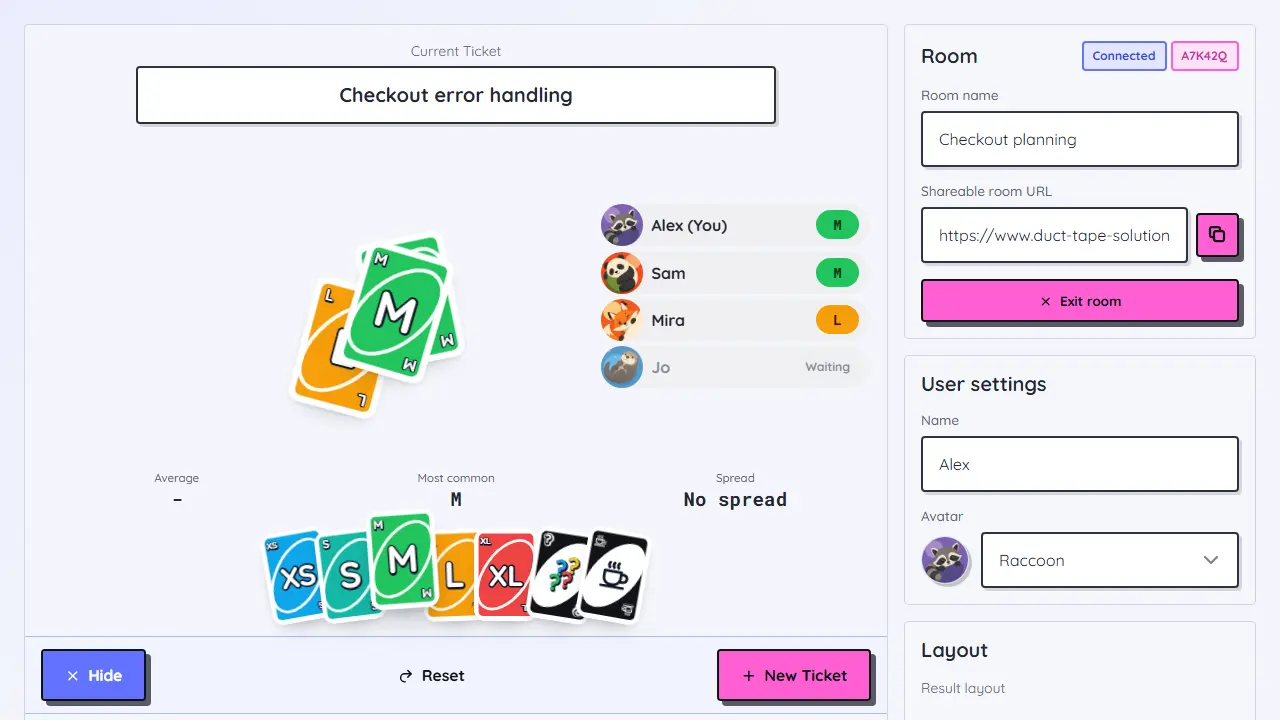
- A distributed team needs a simple room or workflow that works without a physical card deck.
- A product owner wants the discussion to focus on scope, not meeting logistics.
- A facilitator needs roles, rounds, and results to stay visible while the team talks.
Make the ceremony useful
A good Scrum tool should make the team's thinking visible. High estimates, split votes, and repeated uncertainty are signals to slow down, clarify the item, or split the work before the sprint starts.
The tool helps with the mechanics, but the value still comes from the team conversation around assumptions, dependencies, and what done really means.
Facilitation habits that scale
- Prepare small, clear backlog items before asking for an estimate.
- Time-box discussion when the team already agrees, and spend the saved time on items with a wide spread.
- Capture the final decision in the backlog or issue tracker the team actually uses.
- Look for repeated high estimates; they often point to hidden dependencies or stories that should be split.
- Use the tool as a shared workspace, not as a replacement for product judgment.
FAQ
Are these tools only for Scrum teams?
No. They fit Scrum ceremonies, but Kanban, product, engineering, and delivery teams can also use them whenever they need quick collaborative estimation or facilitation.
Should story points be compared across teams?
Usually not. Story points are most useful inside one team because they reflect that team's experience, codebase, risk tolerance, and definition of done.
What should happen after an estimation round?
Capture the agreed estimate, note any risk or follow-up, and split or clarify items that still feel too large or uncertain.
Can remote teams use the same workflow?
Yes. A shared room, private voting, and a simultaneous reveal make the ceremony work well over video calls, chat, or hybrid meetings.