
How do I know which side is the hypotenuse?
The hypotenuse is the side opposite the right angle. It is always the longest side of a right triangle.
Find a missing side of a right triangle by identifying the hypotenuse first, then solving for a leg or the hypotenuse.
The legs are a and b. The hypotenuse c is opposite the 90 degree angle and is always the longest side of a right triangle.
Loading tool...
Add squares when finding the hypotenuse; subtract squares when finding a missing leg.
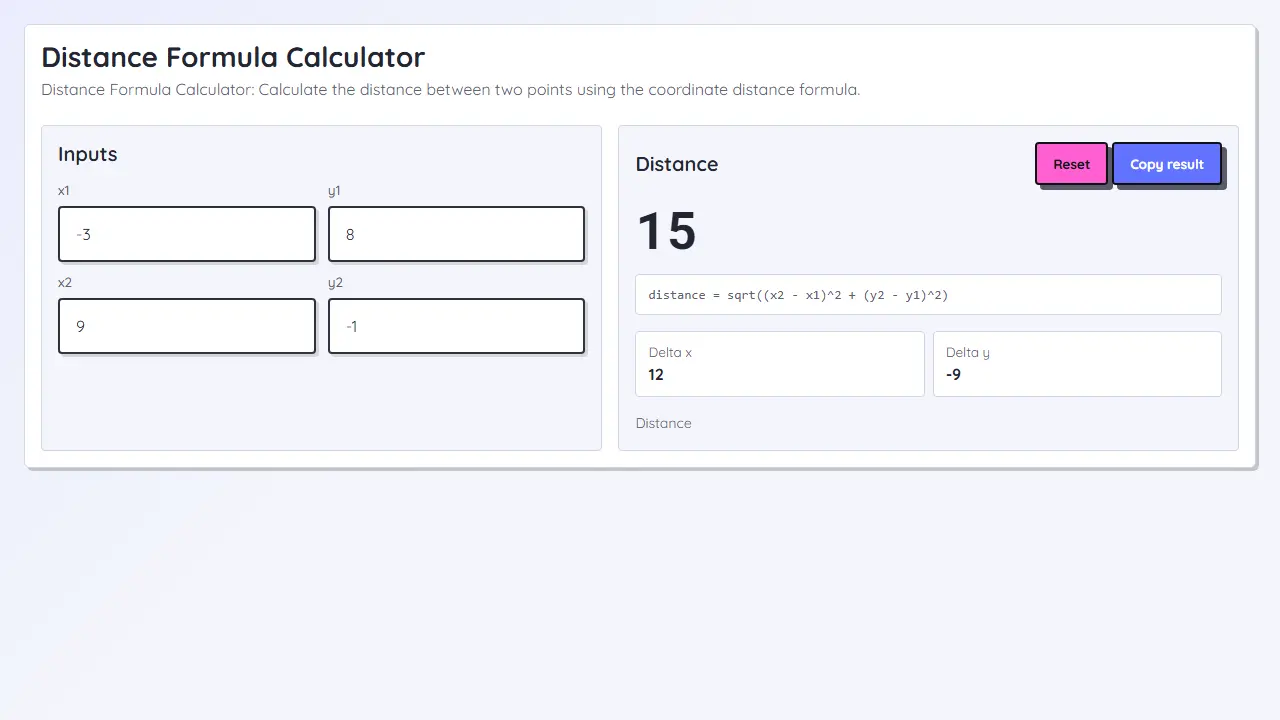
Common examples include a ladder against a wall, the diagonal of a rectangle, coordinate-grid distance, and checking whether three lengths form a right triangle.
The hypotenuse is the side opposite the right angle. It is always the longest side of a right triangle.
Because the theorem starts with c^2 = a^2 + b^2. If the hypotenuse and one leg are known, subtract the known leg square from the hypotenuse square before taking the square root.