
Why should I not add the percent back after a discount?
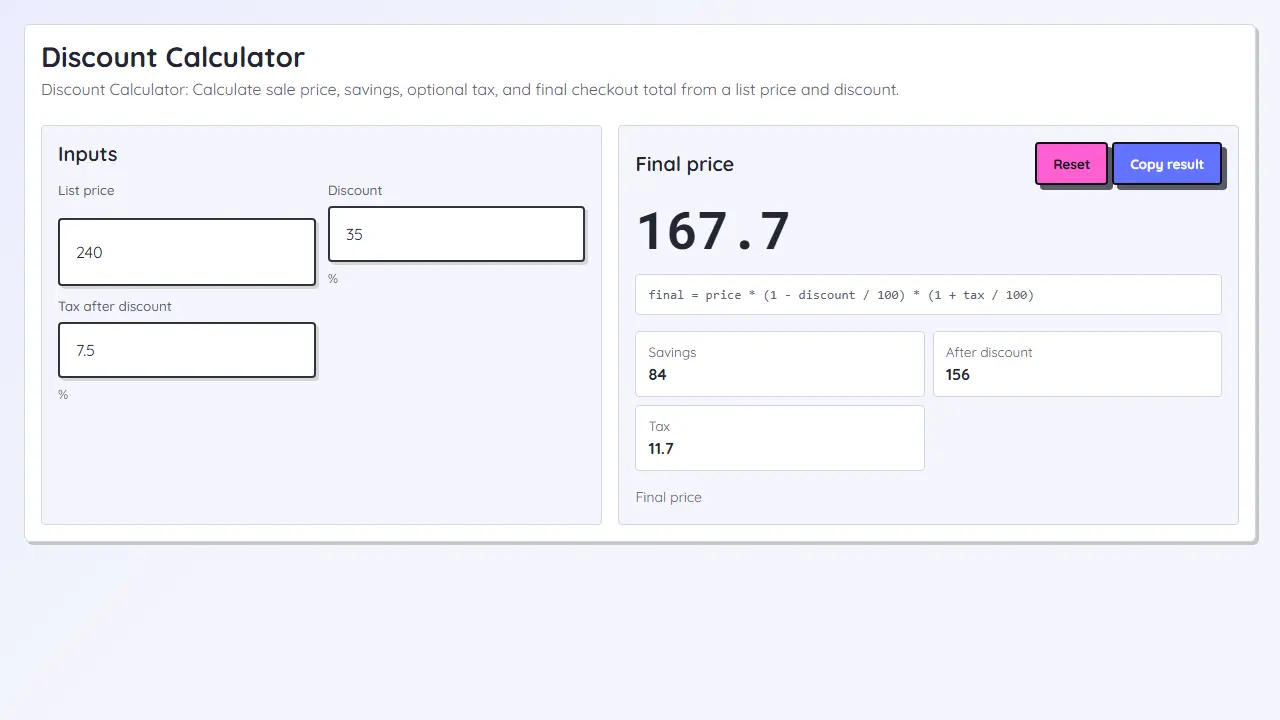
Because the percent was based on the original value, not the discounted value. A 20% discount leaves 80%, so the reverse step is dividing by 0.80.
Back out the original value when you know the final value and the percentage increase or decrease that produced it.
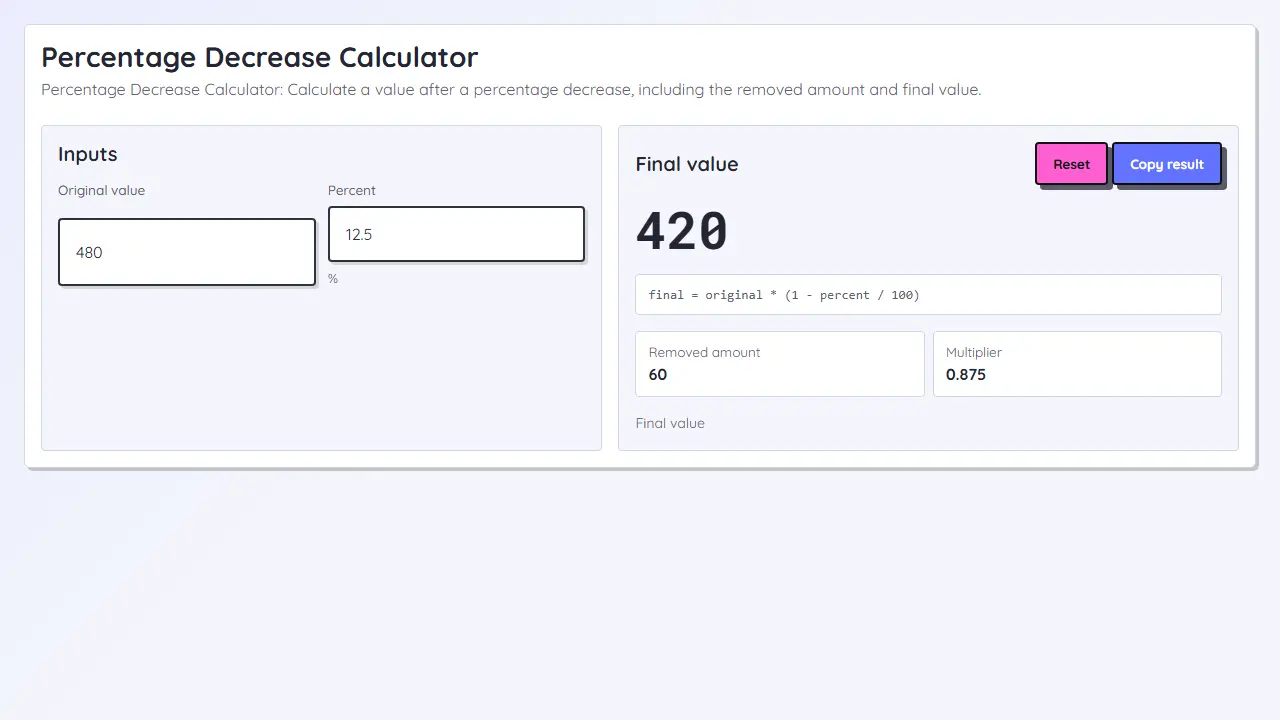
Every percent increase or decrease creates a multiplier. Reverse percentage divides by that multiplier instead of adding or subtracting the percentage a second time.
Loading tool...
Use the increase multiplier for values that grew and the decrease multiplier for values that shrank.
Because the percent was based on the original value, not the discounted value. A 20% discount leaves 80%, so the reverse step is dividing by 0.80.
The multiplier is zero. If the final value is zero, many originals could have led there; if the final value is not zero, the inputs contradict each other.